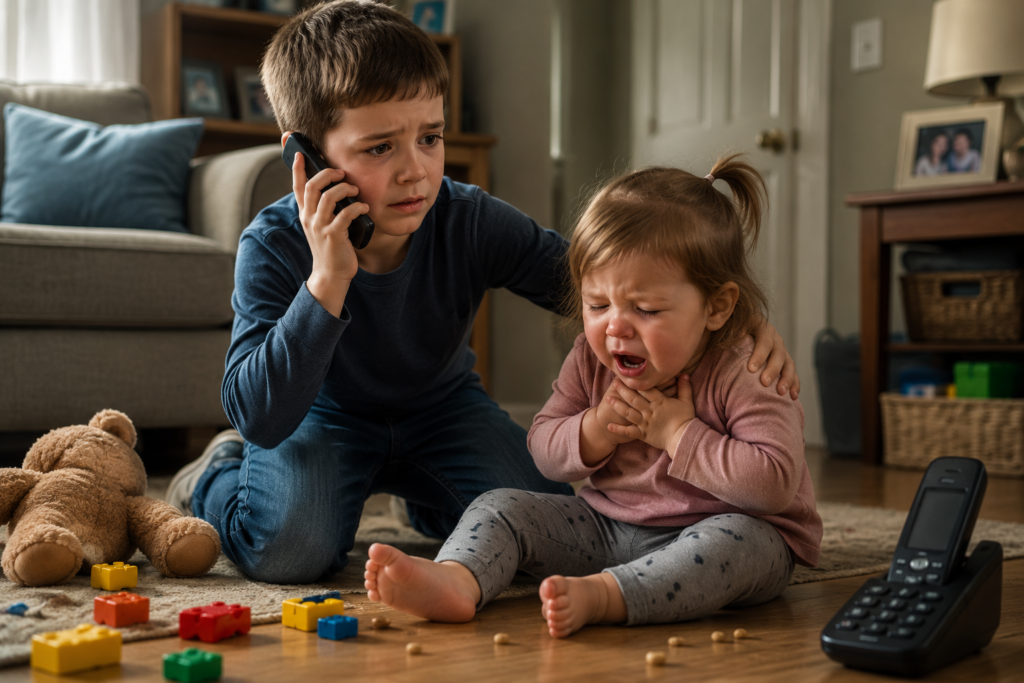
You have asked your toddler to put on shoes four times. Nicely, then firmly, then not nicely at all. Now you are yelling, your toddler is crying or ignoring you, and the shoes are still on the floor.
If you are learning how to get toddler to listen without yelling, the problem is usually not defiance or lack of authority. Toddlers are wired to test, move, and follow their own agenda. Yelling gets a reaction — usually tears or freezing — but it does not teach listening, and over time children tune it out, so you have to get louder for the same response.
This guide gives you a different system: connect before you correct, use seven short phrases that work with toddler brains, and swap yelling triggers for calmer words that still hold the boundary. You will also learn how expectations change from ages 1–2 to 3–4, and what to do on days you yell anyway.
To get your toddler to listen without yelling, get close, get down to their level, and use a calm, short phrase that tells them what to do, not what to stop. Connect first, give one clear direction, offer a simple choice, and follow through kindly and consistently every time.
Why Toddlers Don’t Listen (It’s Development, Not Defiance)
A toddler who does not come when called is often not choosing to disobey. Their brain is still developing impulse control, working memory, and the ability to shift attention. When your 2-year-old is focused on stacking blocks, your voice from the kitchen genuinely competes — and often loses.
Toddlers also process speech more slowly than adults and live in the present moment. “We need to leave in five minutes” means almost nothing. “Two more slides” with fingers held up means a lot more.
Yelling bypasses none of this. It may startle a child into compliance, but it raises stress, models yelling as problem-solving, and weakens the connection that makes a child want to cooperate. Calm, close-up communication works with toddler development instead. The American Academy of Pediatrics explains positive discipline on HealthyChildren.org, its site for parents. Boundaries still matter — delivered close, short, kind, and consistent.
Connection Before Correction: The Step Most Parents Skip
Before any phrase will work, your child needs to feel connected to you. A toddler who feels rushed or corrected all morning will resist almost any direction. Connection is not a reward for good behavior. It is the fuel for cooperation.
- Get close and get low. Crouch face to face instead of calling across the room. Proximity alone doubles follow-through.
- Touch and eye contact. A hand on the shoulder and waiting for a glance tells your child: this is important, and we are on the same team.
- Name what they are doing first. “You are building a tall tower.” Pause, then give the direction. That acknowledgement makes a toddler feel seen instead of ambushed.
- Fill the tank during the day. Five minutes of focused play, dancing in the kitchen, or one snuggled book prevents a surprising amount of power struggles.
- Reconnect after a hard moment. A hug and a fresh start teach your child the relationship is bigger than the conflict.
Correct without connection, and even a perfect phrase sounds like a command from an opponent. Connect first, and the same words sound like guidance. If yelling has become your default, start with our guide on how to stop yelling at your toddler — it pairs directly with the phrases below.
Say Their Name First — Then Check They Heard You
Connection gets you close. This next step makes sure your words actually land. A toddler deep in play often does not register a sentence spoken from across the room, even a calm one. Their brain is busy with the tower, the puzzle, the puddle. Before you give the direction, win their attention first.
Say their name, then wait. “Maya.” Pause until her eyes find yours. That pause is not wasted time — it is the moment her brain switches from play mode to listening mode. If you speak while she is still looking at the blocks, you are talking to the blocks.
Then give the direction once, short and clear. And here is the part most parents skip: ask her to say it back. “Shoes on — can you tell me what we do first?” A toddler who can repeat the job back has heard it. A toddler who stares blankly has not, and repeating yourself louder will not fix that. Go closer, say it again slowly, and help her start the first step with her hands.
This works at every age, and it works because it is a check, not a test. You are not quizzing her. You are making sure the message arrived before you judge whether she followed it. Parents who do this stop asking “How many times do I have to tell you?” — because they find out on the first ask whether the telling ever landed.
How to Get Toddler to Listen Without Yelling: The 7 Phrases That Work
Each phrase is short, tells your child what to do, and keeps you calm because you are following a script instead of escalating. Pick two or three to start and use them consistently for a week.
1. “First ___, Then ___”
When to use it: Transitions and non-negotiable tasks — shoes before the park, teeth before a story, diaper before lunch.
Why it works: Toddlers resist open-ended orders but handle a simple sequence well. “First, then” shows them the thing they want is coming, in a clear two-step map.
Example: Your toddler refuses shoes. Crouch down and say: “First shoes, then park.” Hold up one finger for each step. Wait, help if needed, and go to the park as promised. Always honor the “then” — trust makes this phrase powerful.
2. “Would You Like ___ or ___?”
When to use it: Any task where the what is non-negotiable but the how can be flexible — getting dressed, car seat, bath time.
Why it works: Choices give toddlers the control they crave, inside boundaries you set. A child busy choosing feels like a participant, and resistance drops sharply.
Example: “It’s time for pajamas. Would you like the dinosaur pajamas or the star pajamas?” Both options get pajamas on. If your child says “Neither!” choose kindly: “You didn’t choose, so I will help you with the dinosaur ones.” Follow through without a new negotiation.
3. “Let’s Do It Together”
When to use it: Tasks your child avoids or is learning — cleaning up toys, washing hands, walking to the car.
Why it works: Toddlers copy and join far more readily than they obey. “Together” turns you into a teammate instead of a boss.
Example: At cleanup, instead of “Clean up these blocks right now,” try: “Let’s do it together. You put in the red blocks, I’ll do the blue ones.” Start moving yourself — most toddlers join within seconds.
4. “I See You’re ___. It’s Time to ___”
When to use it: When your child is upset about the direction itself — leaving the playground, ending screen time, stopping a favorite activity.
Why it works: It combines feeling-naming with a clear boundary in one breath. Being understood lowers the temperature, so the direction is more likely to be heard.
Example: “I see you’re mad the TV is off. It’s time to eat lunch.” Then stop explaining — repeating reasons invites debate. If crying starts, wait calmly nearby while it passes, without changing the boundary.
5. “You Can ___, But You Can’t ___”
When to use it: Behavior that needs a safe outlet — hitting, throwing, yelling, climbing, splashing.
Why it works: It validates the urge while redirecting the action. Toddlers hear what is allowed first, which is easier to follow than a list of prohibitions.
Example: “You can stomp your feet and be mad, but you can’t hit your brother. Hit this pillow instead.” Practice the replacement when everyone is calm, so it is familiar in a hard moment. For more tools, see our positive parenting tips for busy families.
6. “When You ___, Then ___ Happens”
When to use it: Repeating behavior with a natural consequence — throwing food, tossing a toy, refusing a car seat buckle.
Why it works: Stated calmly in advance, it is information, not a threat. Your child learns cause and effect, and the consequence — not your volume — does the teaching.
Example: “When you throw the cup, the cup takes a break.” Say it once before the meal. If the cup flies, remove it calmly: “The cup is taking a break. You can try again in a minute.” Return the cup so they can practice succeeding.
7. “I Love You, and the Answer Is No”
When to use it: Moments you are most tempted to yell or cave — repeated begging, public whining, bedtime stalls, demands for treats or one more of anything.
Why it works: It separates love from limits. Your child learns “no” is not rejection and your word is steady, which feels safer than an answer that depends on mood or volume.
Example: “I love you, and the answer is no cookie before dinner. You can have apple slices or cheese.” Say it once, with warmth, then stop. Broken-record calm ends most campaigns faster than arguing or exploding.
Together, these seven phrases cover almost every daily flashpoint. You need to be calm enough, close enough, and follow through every time. Consistency, not charisma, teaches listening.
Warn Before the Change: The 5-2-1 Countdown
Most not-listening is not about the direction. It is about the surprise. A toddler happily sliding down the slide does not want to leave the park — and being told to leave right now, with no warning, feels like an ambush. The direction was clear. The timing was the problem.
Give the ending a countdown. Five minutes before you leave, say it plainly: “Five more minutes, then we go home.” At two minutes, repeat it once: “Two more minutes.” Then the last turn: “Last slide, then shoes on.” Each warning gives your child’s brain time to let go of the fun thing and get ready for the next thing. By the time you say “Time to go,” it is not news anymore.
Use the same countdown everywhere a good thing ends: the bath, the playground, screen time, a visit with grandparents. Keep the warnings short and keep the times honest — if you say five minutes, leave in five minutes. A countdown a parent ignores teaches a child to ignore countdowns.
And when the warning itself is ignored? Do not add a fourth warning, and do not start negotiating. The countdown was the warning. Calmly help their body move to the next thing: take their hand, walk together, and say the direction once more as you go. “We are going home now. You can carry the bucket.” Follow-through after a fair warning is not harsh. It is what makes the next countdown work.
Replace Yelling: The Swap Table
Most yelling happens in predictable moments. Use this table to practice the swap before you need it.
| Instead of yelling this | Say this instead |
|---|---|
| “Stop crying right now!” | “You’re upset. I’m right here. Take your time.” |
| “How many times do I have to tell you?” | “First shoes, then park. I will help you start.” |
| “Don’t touch that!” | “Hands stay here. You can touch this instead.” |
| “Hurry up, we’re late!” | “Let’s race — can you get to the door before I count to ten?” |
| “You’re not listening to me!” | “I need your eyes looking at me. Now I can tell you.” |
| “If you don’t stop, no park tomorrow!” | “When you throw the toy, the toy takes a break.” |
| “Because I said so!” | “I love you, and the answer is no. It’s my job to keep you safe.” |
| “Clean up this mess right now!” | “Let’s do it together. You start with the cars.” |
Every swap is shorter, closer, and more specific than the yelled version, and tells your child what to do, not only what to stop. Routines make swaps easier, too. A visual toddler morning routine chart turns a dozen reminders into a calm “What’s next on your chart?”
How to Get Toddler to Listen Without Yelling at Different Ages
The phrases stay the same, but expectations should match your child’s stage. Asking a 15-month-old for 4-year-old listening will frustrate everyone.
Ages 1–2: Show, don’t just tell
- Use two- to four-word directions: “Shoes on.” “Sit here.”
- Expect to help with almost everything. “Listening” here means starting the action with your help, hand over hand.
- Redirect more than you correct. A 1-year-old climbing the bookshelf needs a safe place to climb, not a lecture.
- Repeat calmly many times a day. Repetition is the teaching method at this age, not a sign you failed.
- Use signs, pointing, and pictures alongside words.
Ages 3–4: Reason a little, choose a lot
- Give simple reasons once: “We hold hands in the parking lot to stay safe.” Then hold the boundary without re-debating it.
- Offer choices constantly, and let your child handle more steps alone — carrying their plate, zipping their coat.
- Use first/then and when/then for longer sequences, and preview the day: “After preschool, we go to Grandma’s.”
- Start teaching repair: “You yelled at your friend. Let’s check if he’s okay and say sorry together.”
- Expect testing anyway. Threenagers are a real phase — firmer opinions, same need for calm limits.
At every age, hunger and tiredness undo your best phrasing. Protect sleep, snacks, and downtime first. The CDC’s Parents Essentials resources include age-by-age guidance to help set realistic expectations.
What to Do When You Yell Anyway: Repair Matters
You will yell sometimes — tired, touched-out, running late, or ignored for the tenth time. One moment does not undo your progress. What matters is the repair.
- Calm your own body first — water, fresh air, a minute alone if your child is safe.
- Get low and apologize briefly: “I’m sorry I yelled. That was too loud.”
- Restate the boundary calmly: “I still need shoes on. Let’s do it together.”
- Reconnect with touch or play before moving on.
Apologizing does not weaken your authority. It models what you want them to learn: people make mistakes, own them, and fix them with words. Notice your triggers and build your swap in advance for that exact moment. If you are yelling many times a day or feel out of control, talk with your pediatrician or another trusted professional. Support for parents is part of good care for children.
Frequently Asked Questions
Why does my toddler listen to everyone else but not me?
Because you are their safest person. Toddlers hold it together for teachers and grandparents, then release big feelings and testing at home. It is frustrating, but it is also a sign of secure attachment. Stay consistent — listening will follow the connection.
How long does it take for these phrases to start working?
Many parents notice less resistance within a few days of getting close, getting low, and using first/then and choices consistently. Deeper habits usually shift over two to four weeks. Pick two phrases and use them every time.
What if my toddler just laughs or runs away when I give a direction?
Stay calm, go to them, and follow through with help: “You’re running. I’m going to help your body stop. It’s time for shoes.” Laughing is often excitement or nervousness, not mockery. Make follow-through boring and kind.
Should I use timeouts instead of yelling?
Brief, calm time-outs or time-ins can be one tool for ages 2 and up, especially for aggression, but they work best alongside connection and clear phrases. Keep them short — about a minute per year of age — and reconnect afterward.
My partner yells even though I’m trying not to. What can I do?
Share one or two phrases, not a lecture about their parenting. Agree on responses for your top two flashpoints, like bedtime and leaving the house, and back each other up. Revisit the plan weekly, not mid-argument.
Is it okay to raise my voice to stop danger?
Yes. A loud, sharp “Stop!” to prevent a child running into the street or touching a hot stove is protective, not harmful. Use it for true safety moments, then return to your calm voice. Saving your loud voice for emergencies makes it effective.
How can I make listening a habit, not a one-time win?
Catch the listening the moment it happens and name it out loud. “You put your shoes on the first time I asked — that helped us get out on time.” Specific praise teaches your child what listening looks like far better than a general “good job.” And link it to the payoff they care about: because they listened, there was time for an extra story, or they got to the park sooner. Children repeat what gets noticed. If the only time listening gets attention is when it fails, they learn that not listening is what makes you look.
What if my toddler never seems to hear me, even up close?
First, check the basics: are they facing you, is the television off, and have you said their name and waited for their eyes? If you have done all of that consistently for a few weeks and your child still rarely responds to their name or to sounds, avoids eye contact, or shows delays in talking or understanding words, talk with your pediatrician. Most listening struggles are developmental and pass with calm, consistent practice — but a professional can rule out hearing or developmental concerns early, and early is always better. This is general information, not medical advice, and your pediatrician knows your child best.
Listening Grows From Calm, Not Volume
Your toddler will not remember whether you found the perfect words on a random Tuesday. They will absorb the pattern: a parent who comes close, speaks kindly, means what they say, and repairs when they miss the mark. That pattern becomes a 5-year-old who listens the first time — most of the time.
Start small this week. Choose the two phrases that fit your hardest moments, practice the swaps, and connect before you correct. When you slip and yell, repair and begin again. You are building a home where directions are clear, boundaries are steady, and nobody has to shout to be heard.