
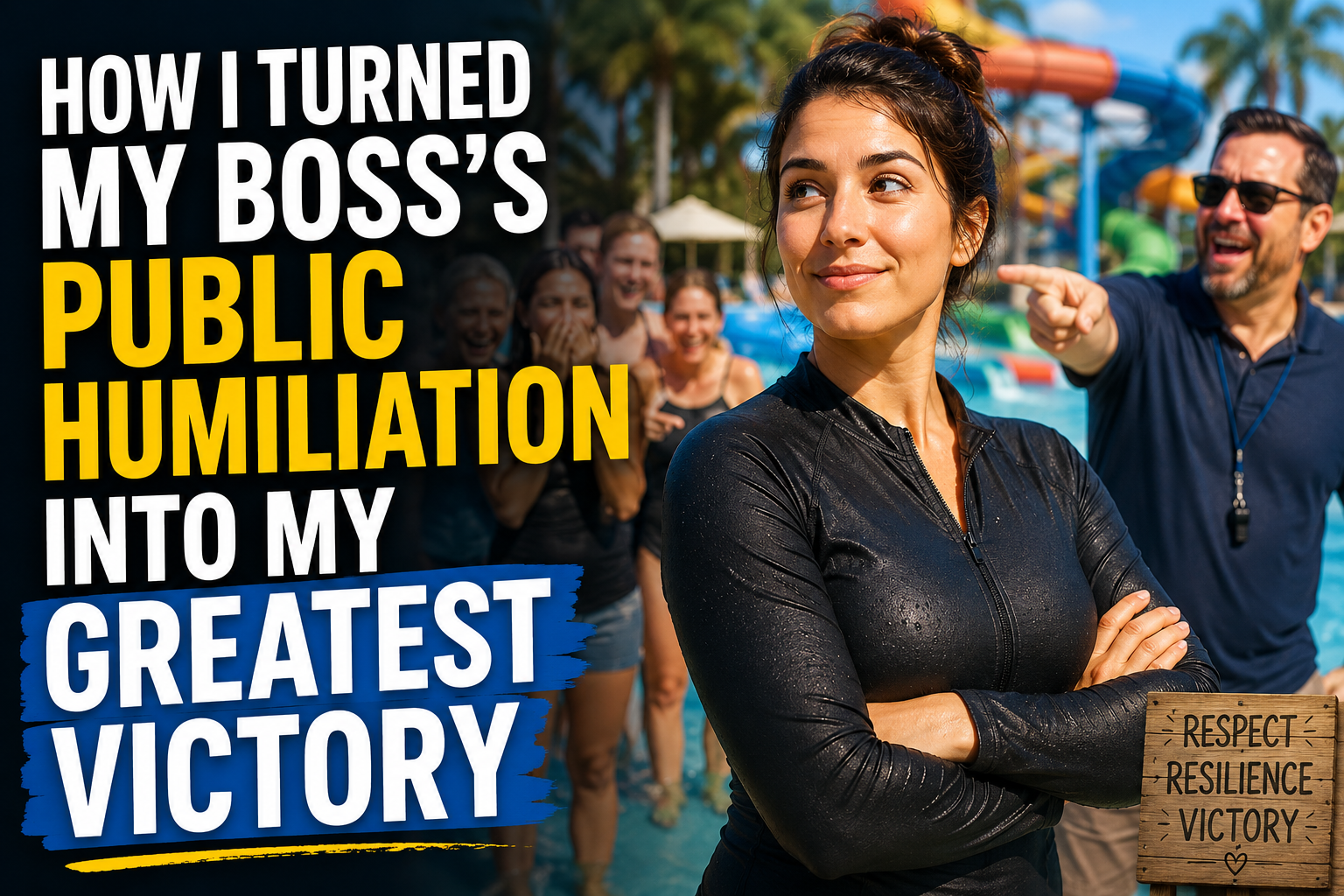
My Boss’s Public Humiliation Into Victory wasn’t just a difficult day at work—it became the moment that changed my life forever. What started as a company outing filled with laughter quickly turned into one of the most embarrassing experiences of my career when my boss tried to humiliate me in front of my coworkers. At the time, I felt shocked, hurt, and completely powerless. Looking back now, I realize that one unexpected decision transformed that painful experience into my greatest personal and professional victory. This is the story of how I refused to let public humiliation define me—and how it ultimately became the foundation of my success.
Some moments stay with you for years.
Not because they made you proud, but because they changed the way you see yourself.
For me, that moment happened during what was supposed to be a fun company outing. My boss tried to make me the punchline in front of everyone. At the time, I felt embarrassed, frustrated, and completely alone.
What I didn’t realize was that the same day would become the turning point of my career.
Looking back now, I don’t remember every joke that was made. I remember the decision I made afterward—and how that choice changed everything.
When a Fun Day Took an Unexpected Turn
Our company announced a team-building trip to a local water park, and everyone seemed excited.
The email promised a day filled with games, food, and activities designed to bring the team closer together. It sounded like a welcome break from deadlines and meetings.
I wasn’t completely comfortable with the idea. Spending an entire day in swimwear around coworkers isn’t exactly everyone’s idea of fun. Still, I wanted to be involved and show that I was willing to participate.
I had no idea the day would unfold very differently than I expected.
The Laughs Slowly Turned Into Something Else
Early in the day, my boss started making jokes about me.
At first, they seemed harmless enough.
I smiled along with everyone else.
But the comments kept coming.
He poked fun at the way I spoke.
He joked about my cautious personality before we went on the larger slides.
Eventually, the teasing became personal enough that the atmosphere changed.
Some coworkers stopped laughing.
Others looked uncomfortable but stayed silent.
I smiled because I didn’t know what else to do, but inside I felt every comment.
Public Embarrassment Leaves a Lasting Mark
Many people underestimate how deeply public embarrassment can affect someone.
It’s not simply about feeling awkward for a few minutes.
It can leave you questioning yourself long after the moment has passed.
You may find yourself:
- Second-guessing everything you say.
- Feeling anxious before work.
- Avoiding meetings or conversations.
- Losing confidence in your abilities.
- Wondering whether people still respect you.
By the afternoon, I had experienced every one of those feelings.
For a while, I seriously considered going home.
The Question That Changed Everything
Then I asked myself one simple question.
What can I actually control?
I couldn’t control my boss’s behavior.
I couldn’t erase what had already happened.
But I could decide how I responded.
That realization instantly shifted my mindset.
Instead of focusing on the humiliation, I focused on the person I wanted to be.
Choosing Self-Respect Instead of Revenge
Part of me wanted to fire back with a sarcastic comment.
Another part wanted to leave and never look back.
Neither choice would have improved the situation.
So I made a different decision.
I stayed calm.
I stayed respectful.
Most importantly, I refused to let someone else’s behavior determine my own.
Looking back, that wasn’t weakness.
It was one of the strongest choices I’ve ever made.
An Opportunity I Never Expected
Later that afternoon, the company organized a team challenge.
Each group had to complete a series of activities that required communication, problem-solving, and teamwork.
To my surprise, my boss assigned me to lead our group.
Whether he expected me to fail or simply thought it would be entertaining, I’ll never know.
Either way, I decided to give it everything I had.
Leadership Isn’t About Being the Loudest
Instead of trying to prove people wrong, I focused on helping my teammates succeed.
I encouraged quieter coworkers to share their ideas.
I listened more than I spoke.
Whenever someone became frustrated, I reminded the group to keep moving forward.
Before long, our team found its rhythm.
People who had barely spoken all morning started contributing.
The energy shifted.
For the first time that day, I wasn’t thinking about the jokes anymore.
I was focused on helping everyone succeed.
Respect Has to Be Earned
When the competition ended, our team finished in first place.
Everyone celebrated.
Several coworkers thanked me for keeping the group organized and positive.
One colleague quietly pulled me aside.
“I should’ve spoken up earlier,” they said.
That meant more to me than the trophy.
Sometimes people stay silent because they don’t know how to help.
Kindness often gives others permission to do the right thing.
What Happened After We Returned to Work
I assumed everyone would forget about the outing by Monday.
Instead, something unexpected happened.
Coworkers began asking for my opinion during meetings.
Managers trusted me with larger projects.
People naturally started coming to me when they needed help solving problems.
Several months later, I was promoted into a leadership role.
The promotion wasn’t because of a team competition.
It was because people remembered how I handled a difficult situation.
Pressure has a way of revealing character.
What That Experience Taught Me About Leadership
That day completely changed my understanding of leadership.
Real leaders don’t build themselves up by putting others down.
They make people feel respected, valued, and capable.
The best leaders:
- Listen before they speak.
- Encourage instead of criticize.
- Admit mistakes.
- Celebrate team success.
- Treat everyone with dignity.
Those qualities earn trust far more effectively than fear ever will.
Turning a Bad Experience Into Personal Growth
That experience became a turning point.
Instead of replaying the humiliation in my mind, I invested in becoming better.
I read books on communication and leadership.
I practiced speaking more confidently during meetings.
I volunteered for projects that pushed me outside my comfort zone.
Little by little, my confidence returned.
Eventually, I realized something important.
The day that once embarrassed me had become one of the most valuable lessons of my career.
If You Ever Face Public Humiliation at Work
No one deserves to be embarrassed in front of coworkers.
If it happens to you, remember these practical steps:
- Stay calm before reacting.
- Focus on what you can control.
- Document repeated incidents if they continue.
- Talk with HR or a trusted supervisor when necessary.
- Keep doing your best work.
- Don’t allow one bad day to define your future.
One difficult moment does not erase your talent or your potential.
Success Looks Different Than Revenge
Many people think victory means getting even.
I’ve learned something different.
Real victory is walking away with your integrity intact.
It’s earning respect through your actions.
It’s refusing to become the kind of person who hurt you.
Years later, I barely remember the jokes.
What I remember is discovering strengths I never knew I had.
That became my greatest victory.
Conclusion
Life has a way of surprising us.
Sometimes the moments that feel like crushing defeats become the foundation for our greatest successes. We can’t always control how others treat us, but we can control the character we show in response.
My boss may have tried to embarrass me, but he unknowingly gave me the opportunity to discover resilience, leadership, and confidence that no promotion or award could have taught me.
If you’re facing a difficult workplace today, don’t let one person’s actions define your future. Keep your dignity, keep growing, and trust that your response—not their behavior—will tell the real story.
Frequently Asked Questions
- How should I respond if my boss embarrasses me in public?
Stay calm, avoid reacting emotionally, and address the situation professionally. If the behavior continues, document incidents and speak with HR or another trusted leader.
- Is public humiliation at work considered bullying?
Repeated public ridicule, mocking, or targeting an employee may qualify as workplace bullying depending on company policies and local employment laws.
- Can difficult workplace experiences help personal growth?
Yes. While painful, these experiences can strengthen resilience, improve communication skills, and build confidence when handled constructively.
- How can I regain confidence after being embarrassed at work?
Focus on your strengths, continue producing quality work, seek constructive feedback, and remember that one uncomfortable moment doesn’t define your value.
- What makes someone a strong leader?
Strong leaders treat people with respect, communicate honestly, encourage teamwork, accept responsibility, and help others succeed rather than seeking attention for themselves.