Prefer stories? Read one family’s tale: this heartwarming vacation memory.
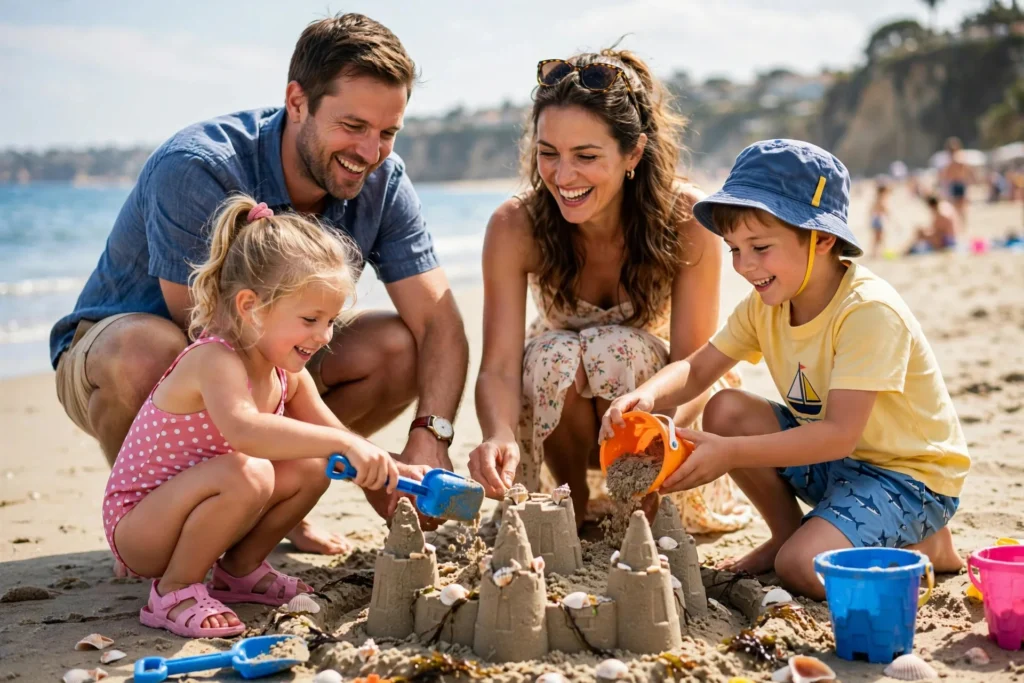
Ask any adult about their happiest childhood moments and most will describe family vacation memories — the road trip singalongs, the beach where they built a lopsided sandcastle, the hotel pool they never wanted to leave. As parents, we get to create those moments for our own children. But great family vacation stories do not happen by accident. They are built with a little planning, a lot of presence, and the willingness to embrace imperfection.
Whether you are planning a big international adventure or a weekend camping trip two hours from home, this guide will help you turn ordinary travel into lasting family travel stories your kids will retell for decades.
Why Family Vacations Matter More Than You Think
Childhood researchers have found that experiences shape children far more than material things — and research on family travel and wellbeing backs this up: shared travel builds lasting happiness. A family trip — even a modest one — gives kids three things toys cannot: undivided parental attention, novel experiences that build confidence, and shared stories that become part of the family’s identity.
You do not need a big budget. Studies on family happiness show that what children remember is not the luxury of the hotel but the feeling of togetherness — parents who were relaxed, present, and a little bit silly. When schedules are packed, these positive parenting tips for busy families can help you protect that unhurried, present time together.
Before You Go: Planning Unforgettable Vacation Memories
Involve the Kids in Planning
Children as young as four can help choose between two destinations or pick one activity for the itinerary. When kids have a say, they feel ownership of the trip — and they remember it more vividly. Let each child pick one “must-do” and build the plan around those choices.
Plan Less Than You Think You Should
The number one mistake families make is over-scheduling. Leave at least half of each day unstructured. Some of the best family vacation memories come from unplanned moments: a playground discovered by accident, an extra hour at the beach because nobody wanted to leave.
Create a Trip Countdown Ritual
Start a paper chain countdown or a chalkboard countdown two weeks before departure. The anticipation itself becomes part of the memory. Kids will talk about “the trip” for weeks beforehand, which doubles the joy.
Pack a “Memory Kit”
Bring a small bag with: a disposable camera for each child, a travel journal, stickers, and a zip bag for collected treasures (shells, ticket stubs, interesting rocks). When kids document the trip themselves, they engage with it more deeply.
During the Trip: Being Present Beats Being Perfect
Put the Phone Away (Mostly)
Designate phone-free hours — during meals and one activity per day. Your children will remember whether you were watching them or watching your screen. Take your photos in short bursts, then put the device away.
Say Yes More Than Usual
Vacation is the time to relax your normal rules a little. Ice cream before dinner? One more ride? Staying up an hour past bedtime to watch the stars? These small “yeses” become legendary family travel stories.
Create One Signature Moment Per Trip
Every memorable trip has one standout moment the family talks about forever. Engineer at least one signature experience — a sunrise hike, a cooking class, a boat ride, a campfire with stories — that becomes one of your family’s favorite vacation stories. It does not need to be expensive — it needs to be distinctive.
Let Things Go Wrong Gracefully
The delayed flight, the wrong turn, the rained-out beach day — these mishaps become the funniest stories later, but only if parents stay calm in the moment. Kids take their emotional cues from you. Laugh at the mishap and it becomes an adventure; stress about it and it becomes a trauma. Some of the most retold family trip stories start with a surprise — like one family’s secret trip that took an unexpected turn.
Interview Your Kids Each Evening
Spend five minutes before bed asking each child: “What was your favorite part of today?” Record their answers in your phone or journal. Their perspective will surprise you — and years later, reading their child-voice answers is pure gold.
Age-Specific Tips for Lasting Memories
Traveling with Toddlers (Ages 1–3)
Keep expectations low and routines loose but recognizable. Bring one comfort item from home. Toddlers remember feelings more than sights — a happy, relaxed parent is their best souvenir. Do not attempt more than one real activity per day. Even a tearful moment can become family legend — as in the story of the granddaughter whose pool day didn’t go as planned.
Traveling with Young Kids (Ages 4–8)
This is the golden age of wonder. Scavenger hunts (find something red, something smooth, something that makes noise) turn any walk into an adventure. Let them collect, draw, and narrate. Their unfiltered commentary becomes family legend.
Traveling with Tweens (Ages 9–12)
Give them a job: official photographer, navigator, or trip journalist. Tweens engage more when they have responsibility. Also build in some independence — an hour to explore a safe market with a sibling creates confidence and stories.
Traveling with Teens (Ages 13+)
Negotiate, don’t dictate. Let teens opt out of one activity without guilt, and include at least one thing chosen entirely by them. Teens remember trips where they felt respected as near-adults, not dragged along as children.
Capturing Vacation Memories Without Missing the Moment
Give Kids Their Own Cameras
Cheap digital cameras or old phones let children capture the trip through their eyes. Their photos — blurry, sideways, mostly of ice cream — will make you laugh harder than any professional shot.
Take the “Same Spot” Photo
Pick one scenic spot and photograph the whole family there on every trip. Over the years, the changing background and growing children tell a visual story no single album can match.
Collect, Don’t Just Photograph
Start a family collection: postcards from every destination, pressed coins, or a Christmas ornament per trip. Physical collections give kids something to hold, arrange, and show friends.
Write a One-Page Trip Summary
After you return home, write a single page: where you went, the funniest moment, the biggest surprise, each child’s favorite part. File it with your photos. Future you will be amazed how much you would otherwise have forgotten.
Turning Trips into Family Traditions
The Annual Destination Jar
Each January, every family member writes one dream destination on a slip of paper. Draw one — that is the year’s big trip. The ritual of choosing together is itself one of those small vacation memories you’ll treasure.
The “Worst Photo” Contest
At the end of each trip, everyone submits their worst photo. Vote on the funniest. Print the winner and hang it proudly. It teaches kids that imperfect moments are worth celebrating.
The Homecoming Meal
After every trip, cook one meal inspired by the destination. Tacos after Mexico, pasta after Italy, pancakes after that cabin weekend. Taste anchors vacation memories powerfully.
The Trip Story Night
A month after you return, hold a family “story night” where everyone shares their favorite memory. Record it. These retellings polish raw experiences into the permanent family vacation stories your children will one day tell their own kids.
Preserving Memories After You Get Home
Here is the uncomfortable truth about vacation memories: the trip is not where most of them die. They die in the three weeks after you get home, in a camera roll of four thousand photos nobody opens, a bag of ticket stubs on the kitchen counter, and a travel journal that never gets its last entry. The families whose kids retell trip stories for decades are rarely the families who took the best trips. They are the families who built a small system for what happens after the trip ends.
Give every trip one album, one note, and one backup. The day you get home — or the weekend after, while the trip is still vivid — make one album per trip, named with the destination and the year: “Outer Banks 2026,” not “Summer Stuff.” In the album description, write three lines you will be grateful for in five years: who was there, the funniest moment, and the one surprise nobody expected. Then back the album up somewhere other than your phone — a cloud service, an external drive, either one — because phones get lost, and a lost phone should never be the same thing as a lost vacation. One album, one note, one backup. That is the whole system, and it takes about twenty minutes per trip.
Put memories where you can see them, not where you store them. What you can see, you remember; what gets boxed up, you eventually forget. A single shelf by the front door can carry the whole story: one framed photo, one magnet, one postcard, and one small keepsake from each trip. Guests ask about them. Kids remember the trip better. You revisit the stories without trying. A fridge covered in trip magnets does the same work in the kitchen — every school morning becomes a tiny reunion with last summer. The goal is not a museum. It is a home that shows, at a glance, where this family has been together.
Keep two small rituals that cost almost nothing. First, mail yourself a postcard from every destination, with the date and one line about the day written on the back. It arrives after you do, which makes it feel like a message from the trip itself — and years later, a stack of postcards in your own handwriting is worth more than any souvenir you could have bought. Second, buy one Christmas ornament per trip, wherever you are. Every December, decorating the tree becomes a tour of every place this family has been, told in ornaments, with the kids arguing happily about which trip each one came from. Both rituals work because they are tiny, repeatable, and attached to something you already do — check the mail, decorate a tree — instead of requiring a new habit.
Let each child own one piece of the record. The trip summary in this guide is written by a parent, and that is fine — but a memory kept by only one person is a memory one person can lose. Give each child one job for the record: one keeps the ticket stubs, one keeps the journal, one picks the ten photos for the album. When children own a piece of the story, they defend it, retell it, and — years later, as adults — they are the ones who bring it up at dinner. That is the real preservation system. Not the album. The people who want to keep telling the story.
Make the Drive Part of the Memory
Ask adults about their favorite childhood vacation memory and a surprising number of them will not name a destination at all. They will name the drive: the singalong that went wrong, the gas station with the giant dinosaur, the rainstorm that turned a highway into an adventure. Families spend enormous energy planning where they are going and almost none planning the hours in between — and then wonder why the kids remember the car ride better than the resort. The drive is not the waiting room for the vacation. For children, it is often the vacation itself.
Build a playlist together, before you leave. Let each family member add five songs, no vetoes, no judgment. The playlist becomes a time capsule on its own — years later, one song will bring back an entire highway. If you want to go one step further, add one “trip song” per vacation, the same way this guide suggests a signature moment per trip. Play it on the way there, play it on the way home, and then never play it again until the next trip. Rituals work because they repeat, and a song costs nothing.
Give the drive its own small traditions. A license-plate game for younger kids. A rule that every state line means one photo out the window, no matter what it looks like. A surprise stop you planned but didn’t announce — a roadside diner, a waterfall five minutes off the highway, a fruit stand with the best peaches anyone has ever tasted. One unplanned-feeling stop per drive is enough; two starts to feel like an itinerary again. And keep one tradition the kids control: let them pick the snack stop, or the rest area, or the terrible joke they tell at every single one. Ownership is what turns a long drive from something endured into something owned.
Use the drive for the conversations the trip is too busy for. A car is one of the few places where nobody is looking at a screen (the driver, at least) and nobody can walk away mid-sentence. Ask the evening-interview question from this guide — “What was your favorite part of today?” — on the drive home, when the whole trip is still warm. Or ask a bigger one: “If we came back here in ten years, what would you want to do again?” The answers you get on the drive home, tired and honest and a little sunburned, are often the ones worth writing in the trip summary. The destination gives you the photos. The drive gives you the story.
Frequently Asked Questions
How do we make vacations memorable on a tight budget?
Proximity beats luxury. A weekend camping trip, a day trip to a nearby town, or even a “staycation” with a strict no-chores rule creates the same togetherness — and the same lasting vacation memories — as an expensive resort. What matters is undivided attention, not the price tag.
What if our kids fight the whole trip?
Sibling conflict on trips is normal — they are tired, off-routine, and together 24/7. Build in separate downtime, keep snacks handy (hunger fuels fights), and do not try to force constant togetherness. The trip will still be remembered fondly.
How many photos should we take?
Enough to trigger memories, not so many that you experience the trip through a lens. A good rule: one short photo session per location or activity, then phones away.
What is the best age to start family vacations?
Any age — just adjust expectations. Babies and toddlers need routine and rest; the memories are mostly yours at that stage. Ages 4–12 are the sweet spot for shared, lasting memories.
How do we handle a trip that goes badly?
First, lower the bar: one good hour can redeem a hard day. Second, find the humor fast — “remember when” stories often come from disasters. Third, talk about it afterward; processing a tough trip together still builds family bonds.
How do we organize thousands of trip photos so we actually look at them?
Use one album per trip, named with the destination and year, and add a three-line note: who was there, the funniest moment, and the biggest surprise. Let each child pick ten photos for the album — ten chosen photos get revisited; four thousand unchosen ones do not. Back the album up somewhere other than your phone. The section above, “Preserving Memories After You Get Home,” walks through the full twenty-minute system.
What is the easiest vacation keepsake to start with?
A postcard you mail to yourself from the destination, with the date and one line about the day on the back. It costs almost nothing, it arrives after you get home, and a stack of them becomes a handwritten history of everywhere your family has been. If you want a second one, add one Christmas ornament per trip — every December, decorating the tree turns into a tour of your family’s travels. Both are covered in “Preserving Memories After You Get Home” above.
Your Next Trip Starts Now
Unforgettable family vacation memories are not bought — they are built, one present moment at a time. You do not need the perfect destination or the perfect plan. You need a little intention, a lot of laughter, and the willingness to put the phone down and be there.
Start small: pick one idea from this guide and use it on your next trip — even a weekend one. Then come back and tell us how it went.
What is your family’s all-time favorite vacation memory? Share it in the comments — your family vacation stories might inspire another family’s next adventure. And if this guide helped you plan, share it with a fellow parent who needs a nudge to book that trip.